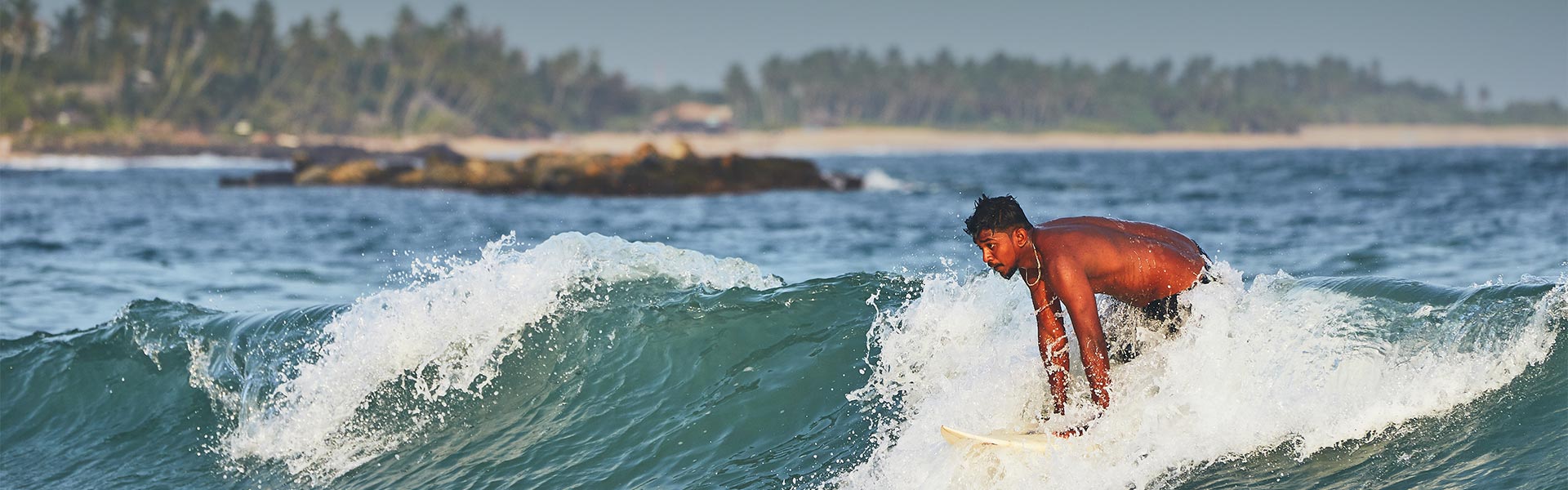
Sri Lanka’s south coast has earned a global reputation for consistent waves, warm water, and a relaxed rhythm that suits both seasoned surfers and first timers. For many travellers, this stretch of coastline is the best place to surf in Sri Lanka, offering warm water, dependable swells, and a compact geography that allows surfers to experience a wide range of breaks.
From reef breaks that challenge confident riders to mellow beach breaks perfect for learning, the south coast offers variety without requiring long transfers or specialist knowledge. It is a region where surf sessions blend naturally into slow afternoons, coastal dining, and thoughtful travel experiences.
Top Surfing Destinations in Sri Lanka
Weligama
Located around 145 km south of Colombo, Weligama is easily reached in approximately 2.5 hours via the Southern Expressway, making it a straightforward first coastal stop after arrival. Its wide, sandy bay produces forgiving, slow breaking waves that peel consistently along the shoreline, which is why it remains one of the most approachable surf locations in the country.
Conditions are dependable, board rental is simple, and accommodation ranges from casual surf stays to refined boutique options. Early mornings bring the cleanest lines, while mid mornings suit longer, relaxed sessions when the bay fills evenly across multiple peaks.
Mirissa
Mirissa sits just 6 km east of Weligama and takes under 15 minutes by tuk tuk, making it an easy progression point rather than a separate base. The surf here is more compact and energetic, centred around Mirissa Point, where reef breaks deliver faster take-offs and shorter rides. This is a natural step up for surfers who have outgrown beach breaks and want more precision without committing to heavier reef systems. Tide awareness matters here, and surfers often time sessions carefully rather than paddling out impulsively.
Midigama
Midigama lies roughly 8 km east of Weligama and is best accessed by tuk tuk or scooter in under 20 minutes, allowing surfers to move easily between breaks. This short stretch of coastline concentrates several well known reef breaks into walking distance, which explains its reputation as Sri Lanka’s surfing capital.
Waves here are fast, often hollow, and demand confidence, particularly on take off. Staying nearby allows surfers to surf selectively based on tide and swell rather than forcing sessions around transport or schedules, cementing its status among the most respected south Sri Lanka surf spots.
Hiriketiya
Hiriketiya is located near Dickwella, about 75 km east of Galle, and takes around 2 hours by road from the central south coast hubs. The bay curves neatly inward, shaping playful rights and lefts that work across a range of conditions, making it one of the more reliable places to surf in Sri Lanka. Its compact size means it rewards early starts, when winds are light and the line-up manageable.
Between sessions, the surrounding cafés and low rise boutique stays create a slower, more considered pace that appeals to travellers seeking balance rather than constant movement.
Best Surfing Season in Sri Lanka
On the south coast, surf conditions follow a clear seasonal pattern shaped by Indian Ocean swells and wind direction. Understanding the intricacies of finding the best times to surf in Sri Lanka helps travellers plan with confidence for calmer seas and accessible coastal travel.
- November to April: Main south coast surf season with offshore winds and consistent swell
- December to February: Clean conditions and steady waves, with busier line-ups
- March to April: Reliable swell with slightly fewer crowds, making April especially appealing
- May to October: South coast conditions become less consistent as the southwest monsoon shifts
- April: Delivers dependable waves across most south coast breaks
Tips for Beginner Surfers in Sri Lanka
Surfing in Sri Lanka for beginners is a breeze. The south coast offers a forgiving learning environment that rewards structure and patience.
- Start on sandy beach breaks where waves reform gradually
- Pick one base break for a few days and repeat it, so you learn timing, paddle routes, and where waves actually stand up
- Choose early morning sessions for cleaner conditions and lighter crowds
- Avoid peak lesson hours if possible to increase wave count
- Begin with a longer board for easier wave entry, then size down once you are catching waves consistently,
- Keep sessions short and consistent to avoid fatigue, then keep midday for exploring or a second, shorter session
- Stay within walking distance of your chosen break for flexibility
Where to Stay on Sri Lanka’s South Coast
For travellers planning surf holidays in Sri Lanka, where you stay matters as much as where you paddle out. Landesi by Nyne Hotels is a refined base inside Galle Fort, paying homage to Dutch era details, curated art, and the slow charm of the Fort itself.
Staying at Landesi allows you to structure your days with intention. Early starts are straightforward for dawn surf sessions along the coast, while afternoons can slow down inside the Fort with thoughtful dining, relaxed walks along the ramparts, or time simply spent unwinding.
Nyne’s curated experiences add further depth to the stay, from guided Fort walks to coastal excursions, all of which sit naturally alongside a surf focused itinerary rather than competing with it.
Secure your stay at Landesi or any of the Nyne Hotel properties through nynehotels.com, and plan a south coast surf journey anchored in comfort, access, and a pace that works around the waves.
Frequently Asked Questions
Where do beginners surf in Sri Lanka?
Beginners usually start on the south coast, with Weligama being the most popular choice. The bay has sandy bottoms, gentle waves, and consistent conditions that make learning safer and more predictable. Lessons and board rentals are widely available, and the long stretch of beach allows plenty of space to practise without feeling crowded.
What is the surfing capital of Sri Lanka?
Midigama is widely regarded as the surfing capital of Sri Lanka. It brings together several well known reef breaks within a short distance, attracting experienced surfers who return season after season. The concentration of quality waves, surf focused accommodation, and year round surf culture has firmly established its reputation.
Where is the best surf in Sri Lanka in April?
In April, the south coast delivers the most reliable conditions. Areas such as Weligama, Midigama, and Hiriketiya all work well during this month, with consistent swell and favourable winds. April also sits just before the seasonal transition, so conditions tend to be stable without the peak season crowds.
Which month is best for surfing in Sri Lanka?
March and April are often considered the best months for surfing on the south coast. Waves remain consistent, winds are generally offshore in the mornings, and the overall balance between surf quality and crowd levels is strong. That said, good surf can be found throughout the main season from November to April.
Which part of Sri Lanka has the best beaches?
The south coast is best known for its beaches, combining long sandy bays, clear water, and easy access to surf breaks. Beaches around Weligama, Mirissa, and Tangalle are especially popular, offering a mix of surf friendly conditions and relaxed coastal settings suited to longer stays.