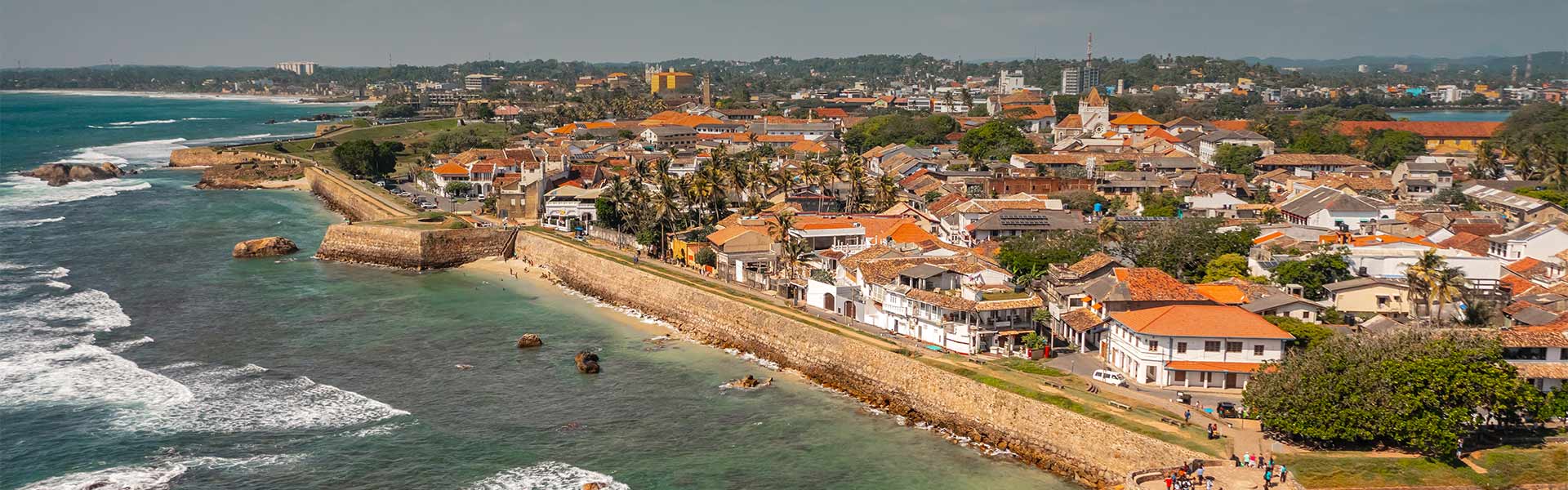
Galle is one of Sri Lanka’s most compelling coastal cities, where centuries of history sit comfortably alongside a relaxed, contemporary rhythm. Set on the island’s southern shoreline, it offers a rare balance of culture, architecture, and ocean views within a walkable, well-preserved setting.
If you’re seeking the best places to visit in Galle, Sri Lanka, the city delivers depth rather than spectacle. It rewards those who take time to explore its layered past, creative present, and unmistakable sense of place shaped by the sea and trade routes that once defined it.
Top Attractions in Galle
Galle Fort
Galle Fort is the historic core of the city and a UNESCO World Heritage Site, recognised for its exceptional preservation. Built initially by the Portuguese in the sixteenth century and later expanded by the Dutch, the Fort remains a living neighbourhood. Today, its narrow streets are lined with colonial villas, mosques, churches, boutique hotels, and independent cafés. Walking through the Fort reveals a blend of cultures and eras, where daily life continues against a backdrop of thick stone ramparts and ocean views.
Galle Lighthouse
Located at the southeastern tip of the Fort, the Galle Lighthouse is Sri Lanka’s oldest operational lighthouse. The current structure dates back to 1939 and stands as a striking white landmark framed by palm trees and sea. While visitors cannot enter the lighthouse itself, the surrounding area is ideal for a coastal stroll, offering uninterrupted views of the ocean and Fort walls, particularly appealing in the late afternoon.
National Maritime Museum
The National Maritime Museum is housed in a restored Dutch warehouse near the Old Gate of the Fort. It provides insight into Galle’s maritime significance as a trading port along ancient Indian Ocean routes. Exhibits cover traditional fishing practices, naval history, shipwreck discoveries, and marine biodiversity. The museum adds valuable context to the city’s coastal identity, linking historic trade with present day conservation efforts.
Dutch Reformed Church
One of the oldest Protestant churches in the country, the Dutch Reformed Church, dates back to the mid eighteenth century. Its understated exterior conceals a rich interior featuring floor tombstones, memorial plaques, and original wooden furnishings that reflect the lives of early Dutch settlers. Still active today, the church offers a quiet moment of reflection within the Fort’s historic streets.
All Saints’ Anglican Church
Built in the late nineteenth century during the British colonial period, All Saints’ Anglican Church introduces Gothic Revival architecture to Galle Fort. Pointed arches, stained-glass windows, and a calm interior distinguish it from earlier Dutch buildings nearby. Its location close to the ramparts makes it easy to include while exploring the Fort on foot.
Galle Fort Ramparts Walk
Walking the Fort ramparts is one of the most rewarding ways to experience Galle. The stone walls trace the edge of the Fort, with the Indian Ocean on one side and the historic town on the other. Sections near Flag Rock and Moon Bastion are especially popular at sunset, when the changing light highlights the scale of the Fort and the city’s coastal setting.
Best Time to Visit Galle, Sri Lanka
Galle is a year-round destination, but the experience shifts noticeably with the seasons. Knowing how the seasons shift helps plan a stay that feels relaxed rather than reactive.
- December to April: This is Galle at its most vibrant; arguably the best time to visit Galle. Drier weather and calmer seas create ideal conditions for walking the Fort’s ramparts, exploring nearby beaches, and spending long evenings outdoors. Cafés and restaurants are in full swing, coastal drives are easy, and sea conditions suit swimming and whale-watching excursions from nearby Mirissa.
- May to September: The southwest monsoon brings heavier rain and rougher seas, changing the pace of the south coast. While beach time becomes more limited, the Fort itself remains atmospheric, with fewer visitors and cooler afternoons. This period suits slower travel, indoor dining, gallery visits, and travellers who value space and quiet over perfect beach conditions.
- October to November: These transition months bring a mix of short showers and clear spells. The landscape is at its greenest, and crowd levels are lower, though plans benefit from flexibility. It can be a rewarding time for travellers who prefer a softer, less structured itinerary.
A Refined Base in Galle
Whether you are planning a relaxed cultural escape, a coastal stay rich in history, or a slower-paced southern itinerary, Nyne Hotels offers a considered way to experience Galle.
Landesi by Nyne Hotels places you within the heart of Galle Fort, allowing days to unfold naturally between early coastal drives, time spent exploring the Fort’s streets, and unhurried evenings back within its calm, intimate setting. It is a stay for anyone who wants access without noise, and character without excess.
Visit our website to explore Landesi, discover its location near Galle Fort, or connect with our team to plan your stay in one of Sri Lanka’s most distinctive coastal cities.
Frequently Asked Questions
What is Galle famous for?
Galle is best known for Galle Fort, its colonial architecture, and its history as a major trading port influenced by Portuguese, Dutch, and British rule.
How long to spend in Galle, Sri Lanka?
Two to three days is ideal for exploring Galle Fort, visiting museums, walking the ramparts, and enjoying the surrounding coastal areas.
Is it worth visiting Galle, Sri Lanka?
Yes. Galle offers a unique combination of history, walkable streets, cultural depth, and coastal charm that makes it a rewarding stop on any Sri Lankan itinerary.