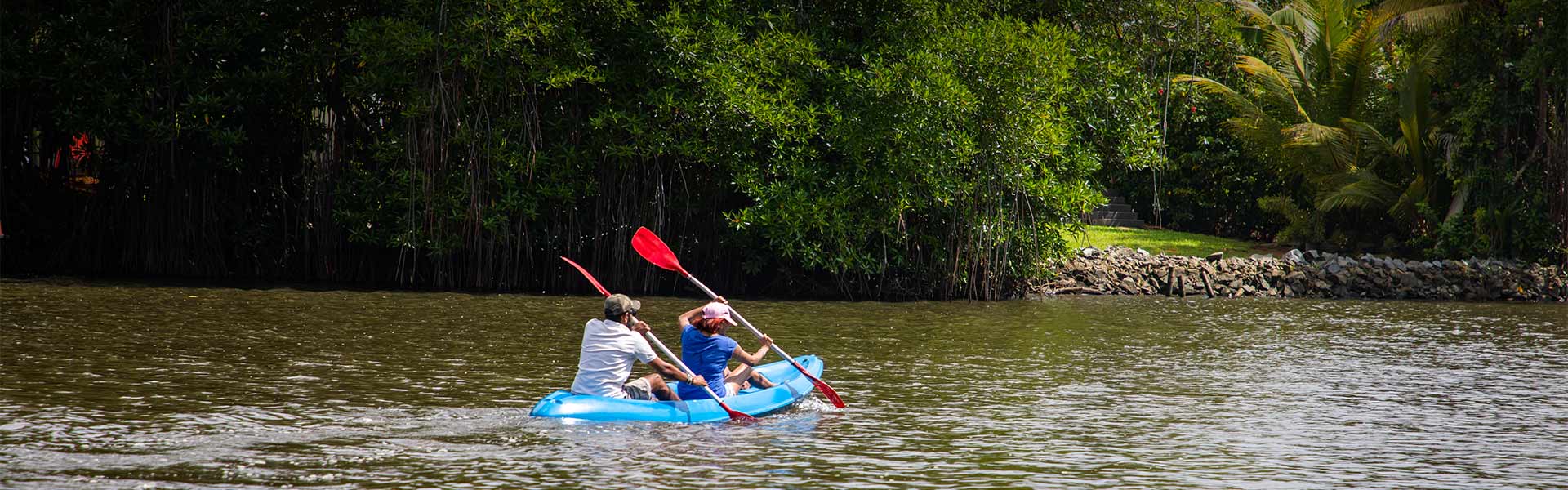
Just inland from the coastal town of Balapitiya, lies one of the most quietly fascinating ecosystems on the island. The Madu River estuary in Sri Lanka, spreads across a mosaic of mangrove forests, open lagoon waters and low-lying islands, forming a Ramsar-recognised wetland of international importance. The Madu Ganga, as it is known locally, feels worlds away from the surf beaches of Bentota and Hikkaduwa, yet it is only a short drive from both. For travellers planning a southern coastal itinerary or plan to be based in Galle, this is where Sri Lanka slows down and reveals a different rhythm.
What Makes Madu River Safari Unique
The appeal of the Madu River lies in its scale. You are not navigating vast, anonymous waters. Instead, you move through an intricate network of channels where every turn reveals something different. The estuary spans roughly 915 hectares and contains over 60 islands, some uninhabited and dense with vegetation, others home to temples or small family-run cinnamon plots.
Because this is a protected wetland, the mangrove ecosystem is remarkably intact. The root systems stabilise the shoreline and create nurseries for fish and crustaceans. Birdlife thrives here. Early morning and late afternoon are particularly rewarding for sightings of herons, egrets and kingfishers, while water monitors can occasionally be seen stretched along the muddy banks.
It feels intimate. The Madu River boat safaris are modest in size, typically carrying a handful of passengers, and the pace is unhurried. You are close to the water, close to the mangroves, close to whatever wildlife decides to reveal itself.
What to Expect During the Safari
A typical Madu Ganga safari lasts between 90 minutes and two hours. Most depart from small jetties near Balapitiya. Your guide will steer through open stretches of lagoon before easing into narrower mangrove tunnels where branches dip low and the light changes completely.
Wildlife is not staged. You may see birds diving for fish, hear the rustle of crabs beneath the mangrove roots, or simply drift through stretches of still water reflecting the sky. The experience rewards observation. Bring a camera with a zoom lens if you’re keen on photography.
There are usually a few stops built into the route:
- A cinnamon island where the peeling process is demonstrated by hand, from shaving the outer bark to rolling the inner layers into quills.
- A small Buddhist temple on one of the larger islands, offering a quiet glimpse into local religious life.
- Small floating platforms offer Madu Ganga fish therapy, a popular stop where little fish gently exfoliate the skin by removing dead cells, leaving your feet noticeably smoother.
Local Culture
The river is part of daily life for the surrounding communities. Fishing remains a primary livelihood. Early in the morning you will see narrow wooden boats casting nets across the lagoon, a practice that has changed little over time.
Cinnamon cultivation is another defining feature. Several of the inhabited islands specialise in small-scale production. Sri Lankan cinnamon, often referred to as Ceylon cinnamon, is lighter, more delicate, and more highly prized than cassia varieties found elsewhere. Seeing it prepared on site adds context to something most travellers only encounter in powdered form.
If you are considering a day out in Madu Ganga, it helps to approach it with cultural awareness. This is not a theme park attraction. It is a working ecosystem intertwined with livelihoods. Choose operators who respect the environment and avoid those that rush through stops or overcrowd boats.
Where to Stay
For travellers arriving in Sri Lanka expecting beaches and historic cities, the Madu River offers something quieter and unexpectedly memorable. Choosing the right coastal base makes the experience far more seamless.
Anugrah offers a private villa setting designed for slow coastal living, with spacious accommodation that prioritises comfort, privacy and a strong connection to the surrounding landscape. Further along the coast, Anuprit provides an equally considered stay, blending contemporary design with relaxed seaside atmosphere, ideal for travellers looking to explore the southwest at their own pace.
Both properties place guests within comfortable reach of Balapitiya while offering access to Nyne Hotels’ collection of curated experiences, allowing each day to move naturally between river safaris, cultural encounters and time along Sri Lanka’s southern coastline. Book your stay now and experience the natural magic of Sri Lanka.
FAQ’S
How many islands are in Madu River?
There are over 60 islands scattered across the Madu Ganga estuary, varying from tiny mangrove patches to inhabited plots with temples and cinnamon gardens.
How much does the Madu River Safari cost?
Prices generally range between LKR 4,000 and 7,000 per boat for a two-hour trip, depending on group size and inclusions.
What to do at River Safari?
Explore mangrove tunnels, observe wetland birdlife, visit cinnamon islands, optionally try fish therapy, and experience the lagoon’s quiet, natural beauty by boat.