What to Expect During Your Visit
Visits are structured and informative, generally lasting under an hour. You begin in the outdoor sand enclosures, where each marked nest indicates its laying date and expected hatching window. This makes it easy to understand how the process unfolds across the season.
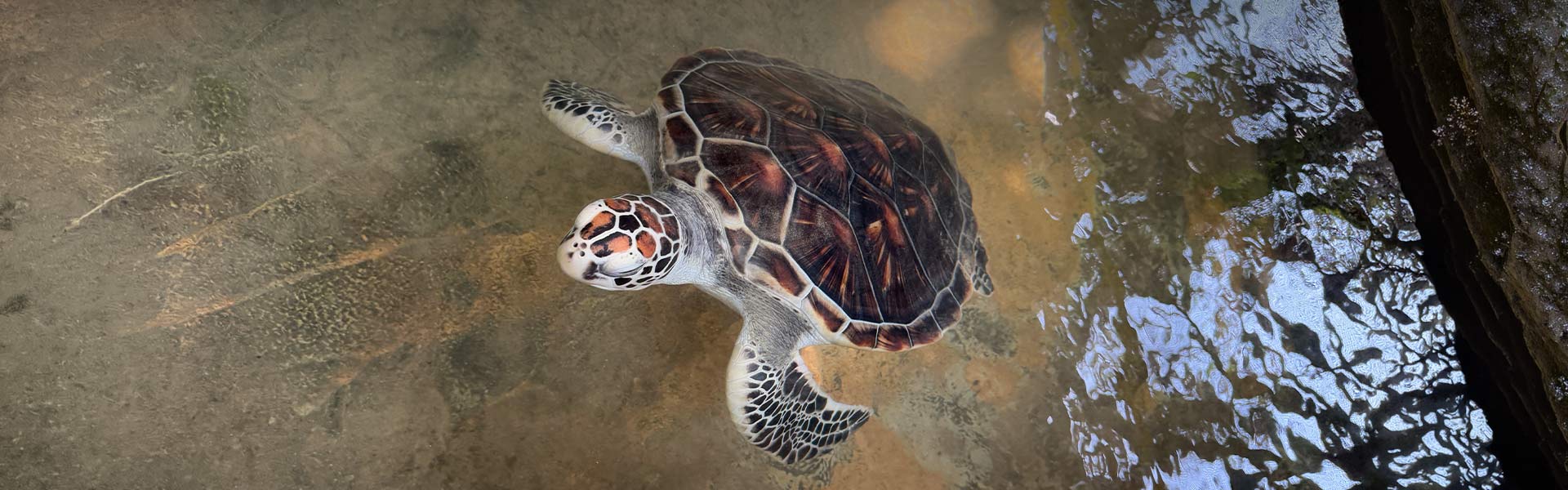
Inside, you may see newly hatched turtles temporarily housed before evening release. Larger tanks hold juveniles recovering from injuries caused by fishing nets or boat propellers. Some individuals with permanent damage remain under long-term care.
The experience is direct and accessible. There is no elaborate staging, simply a clear explanation of how these programmes operate. If your visit coincides with a hatchling release, it typically takes place after sunset. Hatchlings are placed on the beach a short distance from the water so they can orient themselves naturally before reaching the sea.
For those interested in turtle watching in Sri Lanka, nesting activity along the south and west coasts generally peaks between November and April. During this period, adult females come ashore at night to lay eggs. While sightings are never guaranteed, local guides can advise on seasonal activity and appropriate conduct.
Kosgoda’s location makes it easy to combine with other coastal stops. Many travellers visit en route to Galle or incorporate it into a slower exploration of this region’s beaches and waterways.
Turtle Watching Tips and Best Practices
Sea turtles are sensitive to disturbance, particularly during nesting and hatching. Responsible viewing ensures conservation efforts remain effective.
Keep in mind:
- Avoid flash photography, especially at night
- Refrain from handling hatchlings unless guided to do so
- Maintain quiet surroundings during releases
- Follow instructions provided by conservation staff
- Choose centres that prioritise conservation data and rehabilitation
- Visiting in the early evening often lets you experience the educational tour and, when scheduled, a hatchling release.
- Comfortable footwear is recommended, as most areas are sandy.
Visitors frequently find that understanding the lifecycle of these turtles changes the way they view the coastline itself. What appears to be an uninterrupted beach is, in fact, a critical nesting corridor.
Where to Stay
For travellers visiting Kosgoda, Nyne Hotels places you close to the turtle hatchery while delivering two distinct coastal stays along Sri Lanka’s south-west coast.
Anugrah brings beachfront villa living to the forefront, pairing expansive interiors with uninterrupted ocean views. Spend the evening at a hatchling release, then return directly to spacious private accommodation designed for comfort and privacy by the sea.
Just nearby, Anuprit delivers a more intimate coastal retreat with contemporary interiors and immediate beach access. Base yourself here to explore Kosgoda’s coastline while enjoying an exceptionally relaxing stay.
Across both properties, Nyne Hotels’ curated experiences take you further along the coast, from river safaris and wildlife encounters to guided explorations that deepen your time in this part of Sri Lanka. Book your stay today and experience Kosgoda at your own pace.
FAQ’s
How much is the entrance fee for Kosgoda Turtle Hatchery?
Entrance fees typically range between LKR 1,000 and 1,500 per adult, depending on the specific centre and visitor category. It is advisable to carry cash and confirm locally.
When to see turtles in Sri Lanka?
Along the south and west coasts, nesting season generally runs from November to April. Hatchlings are most commonly seen during these months.
How many types of turtles are there in Sri Lanka?
Sri Lanka is home to five nesting marine turtle species: green, hawksbill, olive ridley, loggerhead and leatherback turtles.